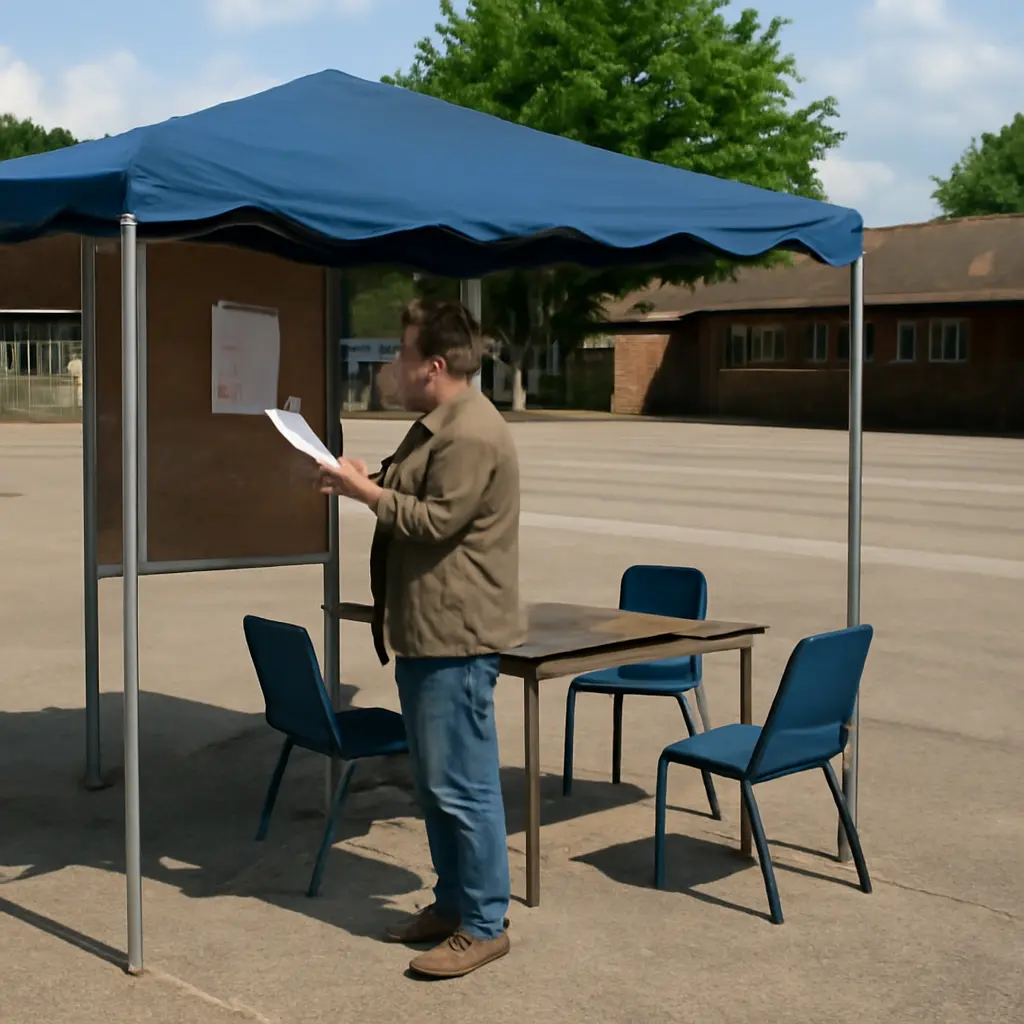
Information gaps in war-torn areas are the dangerous differences between what people need to know and what they can reliably learn or communicate. They can leave families unaware of evacuation routes, aid distribution, medical services, or whether separated relatives are safe. The problem is not simply a lack of internet: conflict can destroy power and telecommunications, restrict journalism, spread deliberate falsehoods, and make sharing information itself hazardous. The scale is substantial: the UN Refugee Agency reported 123.2 million people forcibly displaced worldwide at the end of 2024, while the International Telecommunication Union estimated that 2.6 billion people worldwide remained offline in 2024. Those figures do not measure conflict-related information gaps directly, but they show why reliable communication and trusted local channels matter in crises.
Information gaps describe a critical attribute of conflict-affected communities
An information gap is a mismatch between information people require to make decisions and information that is accessible, understandable, timely, and trustworthy. In humanitarian response, the closely related concept of “communication with communities” treats affected people not only as recipients of messages but also as participants who should be able to ask questions, share concerns, and influence decisions. The United Nations Office for the Coordination of Humanitarian Affairs (OCHA) uses this approach to emphasize two-way communication and accountability.
In war, the gap can concern practical facts—where a clinic is operating—or the credibility of the facts themselves. A message may exist online yet remain useless to someone without electricity, mobile data, literacy in the message’s language, a safe device, or confidence in its source. Information access is therefore shaped by infrastructure, safety, language, disability, gender, age, and trust.
Connectivity and access gaps
A connectivity gap is the inability to reach communications networks or digital services. It may result from damaged towers, fuel shortages, electricity cuts, unaffordable data, network shutdowns, or displacement into areas with weak coverage. The ITU’s estimate that 2.6 billion people were offline in 2024 is a global measure, not a count of people in conflict zones; it nevertheless cautions against assuming that an app or social-media post can reach everyone.
Access also differs within connected populations. Older people, people with disabilities, minority-language speakers, and people who cannot safely use a shared phone may be excluded even when a network functions. Effective response plans combine digital channels with radio, printed notices, help desks, community organizations, and direct outreach.
Information quality and trust gaps
An information-quality gap arises when people encounter claims that are incomplete, outdated, contradictory, or impossible to verify. A trust gap occurs when a source is not considered credible, even if its message is accurate. Both can be intensified by propaganda, rumors, censorship, and the deliberate use of false or misleading content to influence behavior.
The International Committee of the Red Cross (ICRC) has warned that digital threats and harmful information can increase risks for people affected by conflict and for humanitarian operations. This matters because false claims about aid eligibility, safe passage, or disease can prompt dangerous decisions. Organizations should correct errors quickly, explain what is unknown, identify the source and date of updates, and provide a way for people to ask follow-up questions.
Language, disability, and safety gaps
A communication gap can persist even when information is technically available. A warning issued in the wrong language, a video without captions, or a text-heavy notice inaccessible to people with low literacy may fail to serve its audience. Safety concerns create another barrier: survivors of violence, people at checkpoints, or individuals using monitored devices may avoid seeking or sharing information.
These exclusions are not secondary details. Humanitarian communication should use accessible formats, relevant languages, and multiple channels while collecting only necessary personal data. The UN’s humanitarian principles of humanity, impartiality, neutrality, and independence provide an important basis for communicating without exposing people to avoidable harm.
Conflict-related information gaps disrupt safety, services, and accountability
Information gaps affect more than awareness. They can shape whether a person evacuates, reaches treatment, finds food assistance, reunites with family, or reports abuse. They also weaken accountability when affected communities cannot learn how decisions were made or communicate whether aid is reaching them. The consequences are often most severe for people already facing displacement, poverty, discrimination, or restricted mobility.
Safety warnings and emergency decisions
A safety-information gap occurs when people lack dependable, timely guidance about threats, routes, shelter, unexploded ordnance, or changing access conditions. A warning that arrives late, lacks geographic detail, or cannot be verified may be as harmful as no warning. Authorities and aid groups should clearly distinguish confirmed facts from uncertainty and avoid presenting a route as safe without current evidence.
The World Health Organization’s Emergency Medical Teams and broader emergency guidance emphasize coordinated, timely information as part of response. In practice, warnings should be repeated through channels people actually use, made accessible to people with disabilities, and updated when conditions change. No single communication platform should be treated as a universal solution.
Health and humanitarian-service information
A service-information gap exists when people cannot determine which clinics, pharmacies, shelters, water points, or aid services are open and what requirements apply. Conflict can rapidly make directories obsolete as facilities close, supplies run out, and staff relocate. Clear updates should state the location, operating hours, eligibility rules, accessibility, and date of verification where it is safe to do so.
The World Health Organization has documented attacks on health care through its Surveillance System for Attacks on Health Care, illustrating how insecurity can disrupt both service delivery and the information needed to reach care. A service map alone is insufficient if people cannot access it; community health workers, local radio, and trusted civil-society groups can help carry updates to people offline.
Family links and missing-person information
Family-link information gaps arise when conflict, detention, migration, or communications outages separate relatives and prevent them from confirming one another’s safety. The ICRC and National Red Cross and Red Crescent Societies provide services to help restore family contact, including tracing and message services where conditions permit. Their work reflects a basic humanitarian need: people require safe ways to seek news of relatives without exposing themselves or those relatives to further risk.
These services must protect personal information. Publishing names, locations, or contact details without informed consent can expose people to surveillance, retaliation, trafficking, or stigma. Secure referral pathways and clear explanations of how data will be used are therefore essential parts of family communication.
War damages the channels people rely on for reliable information
The information environment in conflict is shaped by overlapping pressures: physical destruction, restrictions on reporting, manipulated content, and uneven access to technology. The same crisis may involve a disconnected village, a city flooded with unverified messages, and a displaced family that has lost access to both its usual media and its social network. Effective analysis must account for these differences rather than treating a population as one audience.
Infrastructure damage and communications shutdowns
Conflict can damage power grids, fiber-optic cables, broadcast facilities, mobile towers, and the roads needed to repair them. Deliberate shutdowns or restrictions can also interrupt communications. The result is not merely reduced convenience: people may lose access to emergency instructions, medical advice, financial services, and contact with family.
The UN Office of the High Commissioner for Human Rights has warned that internet shutdowns can impede access to information and affect rights, including during periods of crisis. Offline resilience—backup power, radio, printed material, and local communication networks—can reduce dependence on fragile digital infrastructure, although each channel has its own reach and safety limitations.
Journalism under threat
Independent journalism helps verify events, document abuses, and explain fast-changing conditions. But reporters in conflict zones may face detention, injury, killing, censorship, displacement, and loss of equipment or communications. UNESCO has repeatedly raised concerns about the safety of journalists, including in conflict settings; its monitoring underscores that threats to reporters can narrow the public’s access to independently gathered information.
When local journalists are absent or silenced, audiences may depend more heavily on official statements, anonymous posts, or outside reporting with limited local context. Supporting journalist safety, protecting editorial independence, and enabling responsible access to information are therefore part of addressing the information gap—not substitutes for humanitarian communication.
Rumors, propaganda, and manipulated media
Rumors can spread where trusted, timely information is missing; propaganda and fabricated media may exploit that uncertainty. A false claim about a military threat or aid distribution can travel through messaging apps and word of mouth before authorities or relief agencies respond. Simply labeling a claim false may not work if the correcting source is distrusted or inaccessible.
A stronger approach is to listen for recurring questions, verify claims with multiple sources, publish corrections in familiar languages, and explain the evidence behind them. Humanitarian organizations should also avoid amplifying harmful content unnecessarily and should assess whether a correction could expose individuals or communities to new risks.
Humanitarian communication can narrow information gaps when it is two-way
Humanitarian communication is most useful when it is designed as an ongoing exchange rather than a one-way broadcast. OCHA’s guidance on communication with affected communities and the Core Humanitarian Standard both emphasize that people should receive relevant information and have meaningful opportunities to provide feedback and influence assistance. This approach connects message delivery to accountability: organizations must listen, respond, and show what changed as a result.
Use multiple channels and local networks
A multi-channel approach combines digital tools with radio, community meetings, trusted local intermediaries, posters, hotlines, and face-to-face outreach. The right mix depends on local security, language, literacy, accessibility, and electricity. Local organizations can identify which sources people trust and which groups are missing from the usual communication routes, but they should not be expected to bear risks without adequate support.
A simple channel plan can specify who needs the information, what decision it supports, how quickly it must arrive, how it will be verified, and what alternative exists if the main channel fails. This is more reliable than assuming that a website, social-media account, or text alert reaches everyone.
Build feedback into response systems
Feedback systems allow people to ask questions, report barriers, flag errors, and challenge decisions. They may include help desks, community representatives, call centers, suggestion boxes, or confidential complaints mechanisms. These systems need clear response procedures; collecting comments without acknowledging or acting on them can further undermine trust.
Organizations can monitor whether people know how to access services, whether they understand eligibility rules, which groups remain unreached, and how quickly reports receive a response. These indicators should be disaggregated where safe and ethical, so that overall reach does not conceal exclusion. Data collection should be proportionate and protect confidentiality.
Protect people and data while communicating
Communication can create risks if it reveals a person’s identity, location, political views, health status, or relationship to an armed actor. The ICRC’s work on data protection in humanitarian action highlights the need to manage personal information carefully. Before collecting or publishing data, organizations should consider necessity, informed consent, access controls, retention periods, and the consequences if information is exposed.
Safety measures also include secure channels, discreet service notices, and options to seek help without public disclosure. The goal is not maximal information collection; it is useful communication that supports informed choices while minimizing foreseeable harm.
Conclusion: Closing information gaps is part of protecting civilians
Information gaps in war-torn areas are produced by unequal connectivity, unreliable or distrusted information, language and accessibility barriers, threats to journalism, and risks associated with sharing personal data. Their effects reach across safety warnings, health and aid services, family links, and humanitarian accountability. Global displacement and connectivity statistics offer important context, but they do not reveal who is being left out in a particular emergency; that requires listening to affected communities and checking access locally.
Humanitarian agencies, governments, media organizations, and technology providers can help by maintaining diverse communication channels, supporting independent and safe reporting, correcting misinformation responsibly, protecting personal data, and giving communities meaningful ways to ask questions and shape decisions. Readers can learn more through OCHA’s communication-with-communities guidance, the Core Humanitarian Standard, and ICRC resources on restoring family links and data protection in humanitarian action.
Sources: UNHCR, Global Trends Report 2024, https://www.unhcr.org/global-trends-report-2024; International Telecommunication Union, Facts and Figures 2024, https://www.itu.int/itu-d/reports/statistics/facts-figures-2024/; UN Office for the Coordination of Humanitarian Affairs, Community Engagement and Accountability, https://www.unocha.org/our-work/coordination/community-engagement; Core Humanitarian Standard Alliance, Core Humanitarian Standard on Quality and Accountability, https://corehumanitarianstandard.org/the-standard; International Committee of the Red Cross, Digital Risks and the Protection of People Affected by Armed Conflict, https://www.icrc.org/en/what-we-do/digital-risks; International Committee of the Red Cross, Restoring Family Links, https://familylinks.icrc.org/; International Committee of the Red Cross, Handbook on Data Protection in Humanitarian Action, https://www.icrc.org/en/data-protection-humanitarian-action-handbook; World Health Organization, Surveillance System for Attacks on Health Care, https://ssa.who.int/; United Nations Office of the High Commissioner for Human Rights, Internet Shutdowns, https://www.ohchr.org/en/internet-shutdowns; UNESCO, Safety of Journalists, https://www.unesco.org/en/safety-journalists.